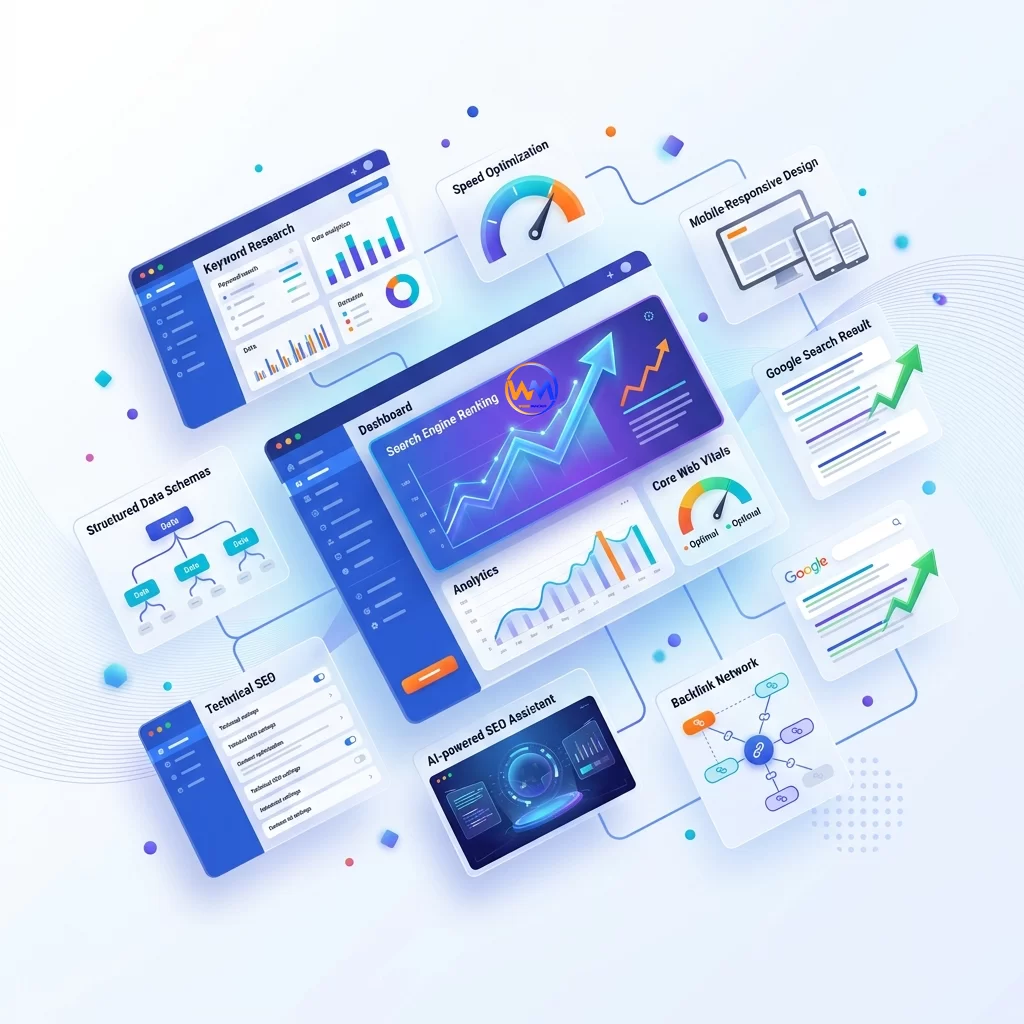
Every website owner wants to appear on the first page of Google, but ranking well requires more than simply publishing content. Google's ranking algorithms now evaluate user experience, website speed, content quality, authority, and technical SEO.
Whether you run a business website, blog, or eCommerce store, following proven SEO strategies can help increase organic traffic and improve visibility.
In this guide, we'll explore 15 powerful SEO tips to improve your Google rankings in 2026.
1. Create High-Quality Content
Google rewards websites that publish original, informative, and valuable content.
Focus on solving users' problems rather than writing only for search engines.
2. Target the Right Keywords
Use keyword research tools to identify search terms with good traffic and achievable competition.
Include keywords naturally in:
- Title
- URL
- Headings
- Meta Description
- Image Alt Text
-
3. Optimize Your Title Tags
Keep titles between 50–60 characters.
Include your focus keyword near the beginning whenever possible.
4. Write Compelling Meta Descriptions
A well-written meta description increases click-through rates.
Keep descriptions under 160 characters.
5. Improve Website Speed
Fast websites provide a better user experience and perform better in search results.
Optimize:
- Images
- CSS
- JavaScript
- Browser Caching
- CDN
-
6. Optimize for Mobile Devices
More than half of all searches come from mobile devices.
Ensure your website is fully responsive.
7. Improve Core Web Vitals
Pay attention to:
- Largest Contentful Paint (LCP)
- Interaction to Next Paint (INP)
- Cumulative Layout Shift (CLS)
-
8. Use Internal Links
Internal linking helps search engines understand your website structure.
Link relevant pages such as:
- Website Development Services
- SEO Services
- Portfolio
- Contact Page
-
9. Build Quality Backlinks
Backlinks from authoritative websites improve your domain authority and search rankings.
Focus on quality rather than quantity.
10. Optimize Images
Always:
- Compress images
- Use WebP format
- Add descriptive ALT text
- Use SEO-friendly filenames
-
11. Add Schema Markup
Structured data helps Google understand your content.
Useful schema types include:
- Article
- FAQ
- Organization
- Breadcrumb
- Local Business
-
12. Submit an XML Sitemap
Submit your sitemap in Google Search Console to help search engines discover new content quickly.
13. Fix Broken Links
Broken links create a poor user experience and waste crawl budget.
Regularly audit your website.
14. Update Old Content
Refreshing older blog posts with updated information often improves rankings without creating new content.
15. Track SEO Performance
Monitor your progress using:
- Google Search Console
- Google Analytics
- PageSpeed Insights
Track:
- Clicks
- Impressions
- Rankings
- Core Web Vitals
Common SEO Mistakes to Avoid
- Keyword stuffing
- Duplicate content
- Slow loading pages
- Missing meta tags
- Poor mobile experience
- Broken links
- Ignoring image optimization
-
Conclusion
SEO is a long-term investment that requires consistency, quality content, and continuous optimization. By implementing these SEO tips, you can improve your Google rankings, attract more organic visitors, and grow your online presence.
Start with technical improvements, publish valuable content regularly, and monitor your performance to achieve sustainable results.
Frequently Asked Questions
How long does SEO take?
Most websites begin seeing improvements within 3–6 months, depending on competition and content quality.
Are backlinks still important?
Yes. High-quality backlinks remain one of Google's strongest ranking signals.
Does website speed affect SEO?
Yes. Faster websites improve user experience and Core Web Vitals, which can positively influence search rankings.
Is mobile optimization important?
Absolutely. Google primarily uses mobile-first indexing, making mobile optimization essential.